
Milano-Cortina 2026: When the Capital of Fashion and the Alps Meet on Store Shelves
While the 2026 Winter Olympics were all about the battles on the slopes, another "competition" was unfolding behind the scenes—specifically in the official gift shops: the race for the coolest merchandise. "Race" is hardly an exaggeration, given the conditions and results we witnessed in the shops.
Our team followed the events closely as fans, while also analyzing the commercial side through a professional lens. In our latest article, one of our colleagues shares firsthand experiences and a deep dive into the Milano-Cortina 2026 Winter Games.
The Winter Olympics by the Numbers
The numbers of the Games speak for themselves. Revenue was built on three major pillars: ticket sales, sponsorship and broadcasting rights, and merchandise sales.
Ticket revenues reached nearly €200 million, representing approximately 1.3 million tickets sold. While prices varied by sport and venue, the average ticket price was €154. Despite the high costs, venues were consistently packed.
Direct sponsorship revenue totaled €550 million from 56 partners. Furthermore, broadcasting rights and the IOC’s 11 global partners contributed €570 million in revenue.
While official data on merchandise sales has not yet been released, we can share our observations. Based on several reports and our own experience, the merchandise was a massive success—so much so that "Sold Out" signs appeared on numerous items throughout the event.
The success of an Olympics must always be viewed through its direct and indirect economic impacts. Preliminary estimates place the total economic impact at approximately €5.3 billion, driven by booming tourism, increased consumption, and job creation. Of this, €2.5 billion impacts Milan alone, representing an estimated +1.7% growth in the city's GDP.
However, these figures must be interpreted alongside another key data point: the overall cost of the Games. Due to rising expenses in infrastructure, security, promotion, and logistics, total costs have exceeded €6 billion, surpassing initial forecasts. As a result, based on these early estimates, the Milano-Cortina balance sheet currently shows a deficit.
Merchandise That Belongs on the Runway
Milan stayed true to its reputation. The collection went far beyond the usual "logo-stamped" souvenirs; the backbone of the merchandising strategy featured premium brands like Armani (EA7) and Salomon.
The style was consistently sleek, incorporating Italy’s iconic colors alongside the event’s official palette. The designs were subtle and built for longevity—not just for a one-time wear. These are timeless, fashionable pieces that hold their own in everyday life, whether in winter or summer. The range covered everything from apparel to accessories. Naturally, winter essentials like beanies, scarves, and gloves were prominent—it was the Winter Olympics, after all, even if Milan itself felt more like spring.
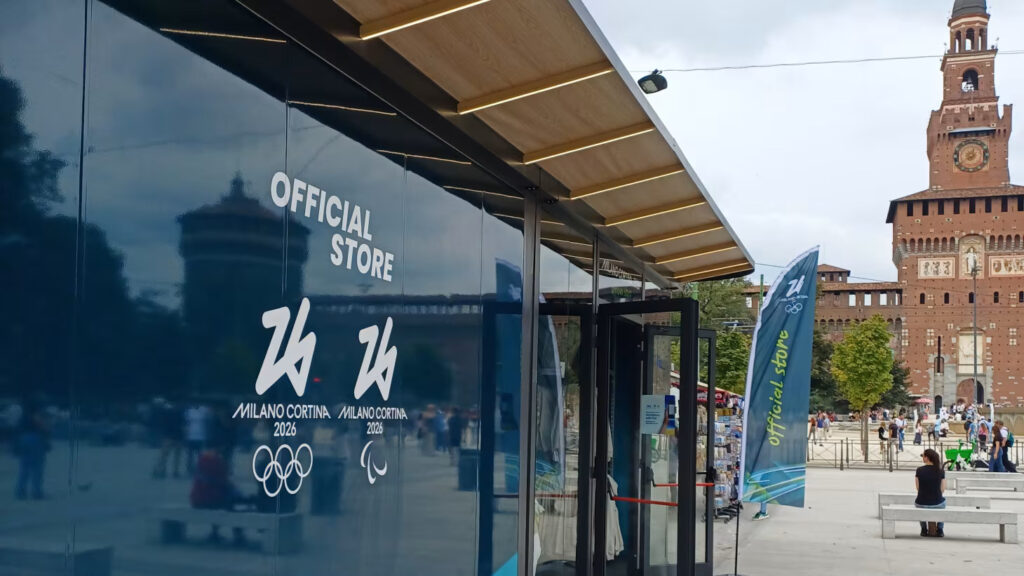
The organizers strategically utilized the city’s layout by placing the central Megastore right in front of Milan’s biggest attraction. Located in the Piazza del Duomo, the store saw constant queues from its 9:00 AM opening every day, with fans leaving after spending significant amounts. The layout was divided into four distinct sections: upon entering, visitors first encountered the general event merch, followed by the official mascot section, then dedicated areas for Salomon and Armani (EA7), and finally, a segment for accessories and gifts.
Interestingly, certain products were exclusive to specific competition venues. The fan shops within the arenas and halls were fully stocked with the most sought-after items. Maximizing every opportunity, there were fan shops located on almost every level and in nearly every sector of the venues.
Additionally, smaller pop-up shops were scattered throughout the city; however, by the beginning of the second week, their shelves were mostly bare as the persistent crowds cleared the inventory.
Once again, pins proved to be a top seller. Rare and special editions sold out within days. Pins are also a huge favorite among the athletes—if pin collecting were an Olympic sport, some of them would surely have taken home the gold.
Mascot Mania
The greatest competition perhaps didn’t take place on the ice or snow, but in the shops. We're joking, of course—or are we?
There was a literal hunt for the official mascots, and according to some sources, they were sold out everywhere within just five days.
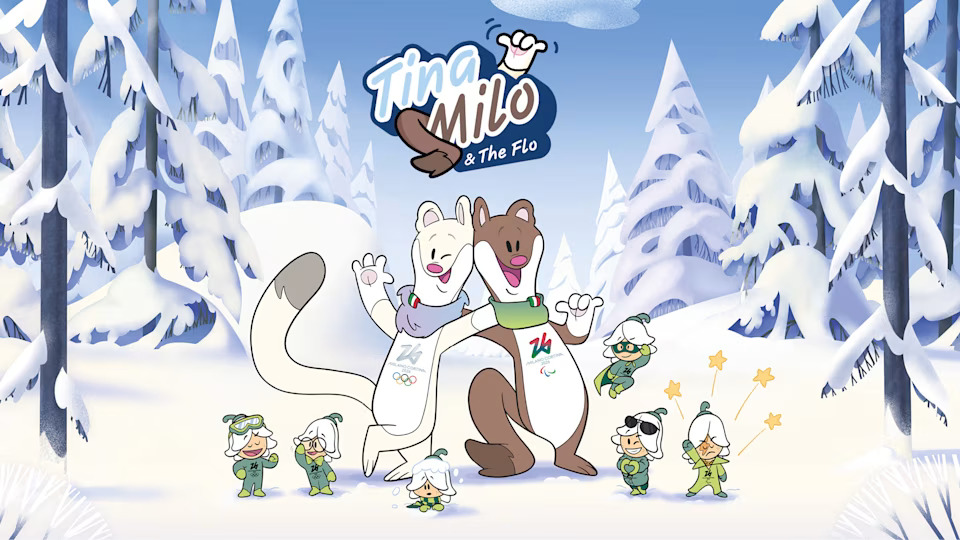
Milo and Tina, the two little stoat siblings, captured everyone’s hearts. The mascot was the one item everyone wanted to take home in some form, most notably as a plush toy. The most popular sizes—18 cm and 35 cm—became scarce just days after the opening ceremony. By the first week of the Games, the "Sold Out" sign appeared even in the webshop. Anyone hoping to order online faced the reality that they wouldn’t be hugging their fluffy stoat until June at the earliest. As an alternative, the "Flos"—six little snowdrops—were also highly popular among fans once the stoats became impossible to find.
A szervezők ugyan számoltak azzal, hogy népszerű lesz a kabala, de azzal nem, hogy ennyire. Szakértők szerint alábecsülték a kabala népszerűségét, ezt „Phryge-effektnek” nevezték, utalva a 2024-es olimpia kabalájának népszerűségére, hiszen ott is a legjobban eladott termék volt.
What makes them so popular? They are cute, backed by a creatively built backstory and brilliant marketing.
Tina, the Olympic mascot, was named after Cortina, while Milo, the Paralympic mascot, was named after Milan. Milo is missing one of his paws and uses his tail instead, symbolizing that one can live a full and vibrant life regardless of physical challenges.
Milano-Cortina 2026 proved what happens when the Olympics are hosted in the capital of fashion: we get high-quality, trendy products that remain incredibly popular, even with premium price tags.
Sources:
Italia Oggi – https://www.italiaoggi.it/marketing-e-media/marketing/olimpiadi-milano-cortina-2026-ecco-tutti-gli-incassi-o9qqy21y
Wanted in Milan – https://www.italiaoggi.it/marketing-e-media/marketing/olimpiadi-milano-cortina-2026-ecco-tutti-gli-incassi-o9qqy21y
NSS Magazine – https://www.italiaoggi.it/marketing-e-media/marketing/olimpiadi-milano-cortina-2026-ecco-tutti-gli-incassi-o9qqy21y
Oldalunk sütiket használ, hogy biztosítsuk Neked a teljes élményt! Ilyen például a beállításaid elmentése. Kérünk, engedélyezd a sütiket, hogy jobb élménnyé tehessük számodra a látogatást a weboldalon!

A szükséges cookie-k elengedhetetlenek a weboldal alapvető funkcióinak biztosításához, és nélkülük az oldal nem működne megfelelően. Ezek a sütik nem tartalmaznak személyazonosításra alkalmas információkat.
A statisztikai cookie-k névtelen módon gyűjtik és jelentik az adatokat, lehetővé téve a weboldal tulajdonosának, hogy jobban megértse a látogatók weboldallal való interakcióit.
A személyre szabási cookie-k lehetővé teszik, hogy megjegyezzük azokat az információkat, amelyek befolyásolják a weboldal megjelenését és működését.
A marketing cookie-k a látogatók weboldalon végzett tevékenységének nyomon követésére szolgálnak, hogy számukra releváns hirdetéseket jelenítsünk meg (például Google Ads, Facebook Ads), és ösztönözzük őket az interakcióra, ezáltal növelve weboldalunk értékét.