
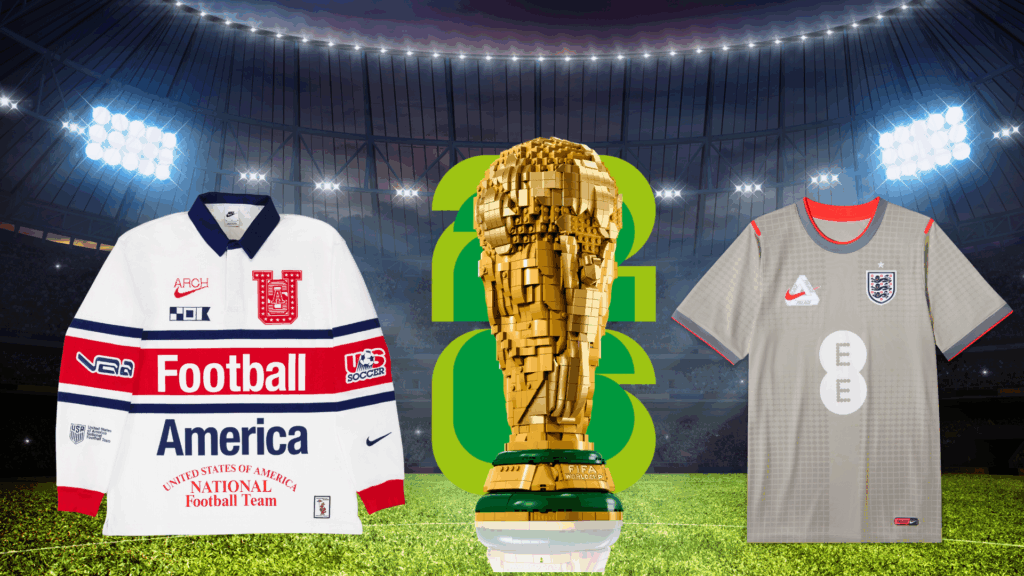
The 2026 FIFA World Cup is the ultimate arena for global brands to take their marketing strategies to the next level. Today, mega sports events extend far beyond the 90 minutes played on the pitch: football, pop culture, nostalgia, and lifestyle have permanently intertwined. In our latest article, we explore several global brands that have executed flawless strategies to maximize the power of co-branding.
Today, no global brand can settle for merely flashing its logo on stadium LED boards or acting as a passive official partner slapped onto a product label. Modern consumers—especially Gen Z and Gen Alpha—have become immune to direct advertising; they seek immersive experiences and authentic storytelling. Every sponsor and brand must bring an added "X-factor" to capture the public's attention. A prime example is denim giant Levi’s, who pulled off a brilliant marketing stunt, stealing the spotlight after FIFA asked them to cover up their stadium logo since they weren't an official sponsor.
Adidas FIFA World Cup™ Bringback Collection
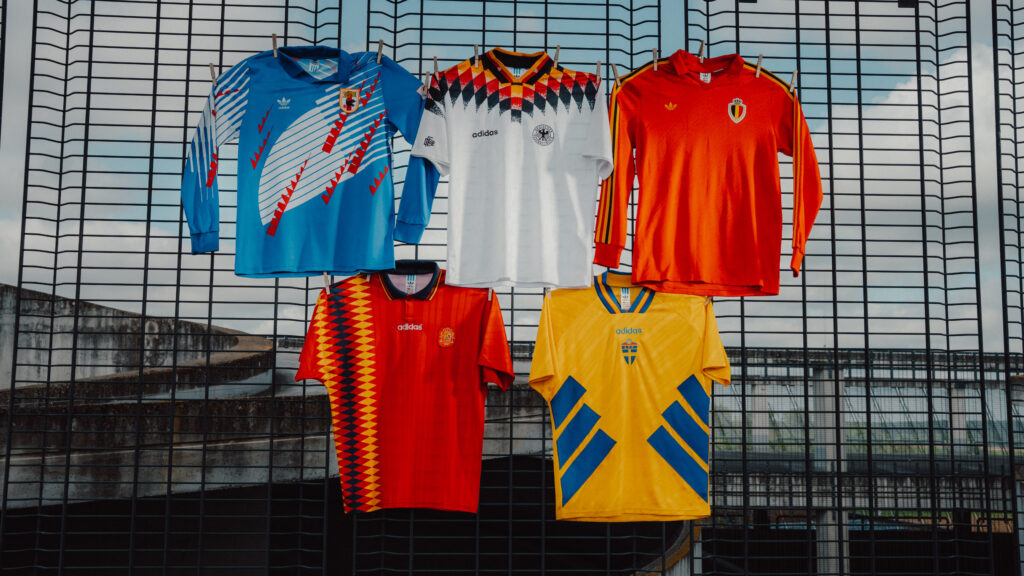
Adidas has unveiled its FIFA World Cup™ Bringback Collection, paying homage to the most iconic national team jerseys ever worn on the sport’s grandest stage. The collection revives legendary designs across multiple generations, celebrating the cultural impact, emotional milestones, and unmistakable aesthetics that have shaped football history.
Drawing inspiration from the archives of unforgettable World Cup eras, the lineup delivers classic cuts and graphics straight to a new generation of football fans, collectors, and conscious consumers. The bold patterns, prominent chest graphics, and distinctive color palettes perfectly mirror the design language that defined football culture in the late '80s, '90s, and early 2000s.
Crucially, this collection goes far beyond the pitch. These streetwear pieces blend football heritage with a contemporary aesthetic. Additionally, cropped, high-fashion women’s versions of select federations' home and away shirts were created, forging an even tighter bond between football culture, fashion, and self-expression.
Nike X2 Collection
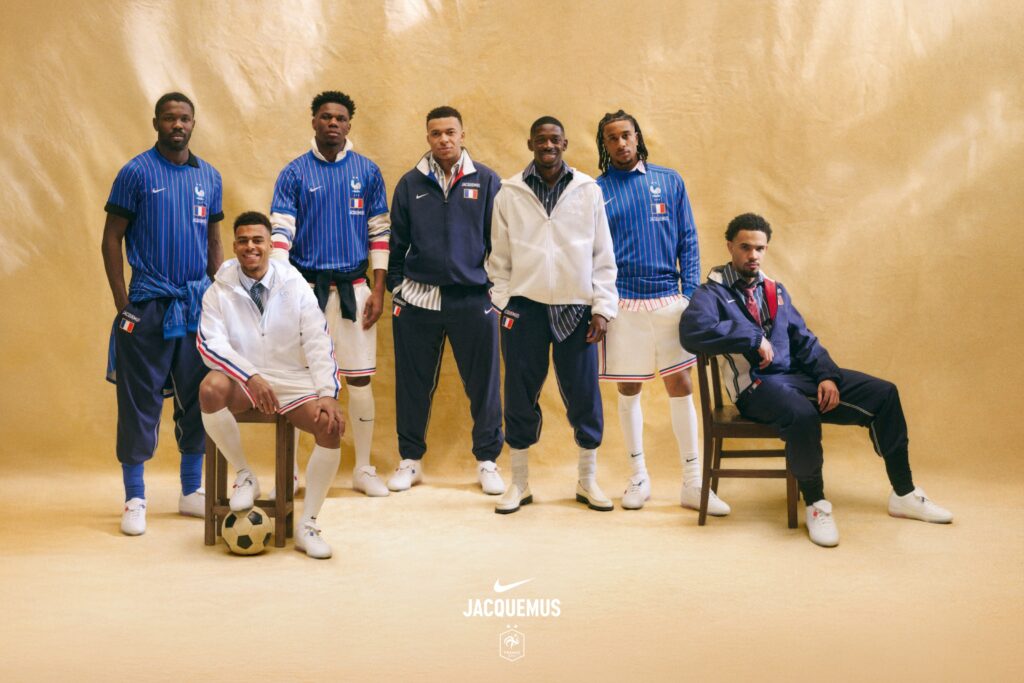
If you ask anyone to name a sports brand, the "Swoosh" is immediately top of mind—but they work incredibly hard to earn that spot. At this year's World Cup, Nike has become an unmissable player both on the pitch and in streetwear culture. While dictating the pace inside the stadiums with innovative national kits and the latest boot drops (the Mercurial Vapor 17 and Mercurial Superfly 11), they are simultaneously shaping trends on the streets with their "X2" collections.
The X2 capsule collections stand at the intersection of football, creativity, and culture. Nike created a unique, three-tier collaborative model, connecting 7 national federations, 7 fashion designers/artists, and 7 local grassroots organizations that support youth sports
Using the official 2026 national team jerseys as a canvas, the designers and local communities reimagined them through their own unique lenses. The result is a series of modern football classics that authentically reflect each nation’s distinct style.
This initiative is about much more than fashion. Nike has selected a local, youth-focused sports organization for each of the seven projects, backing them with direct financial investments. The brand has made a long-term commitment to the daily missions of these foundations, actively building and securing the future of youth sports.
Lego
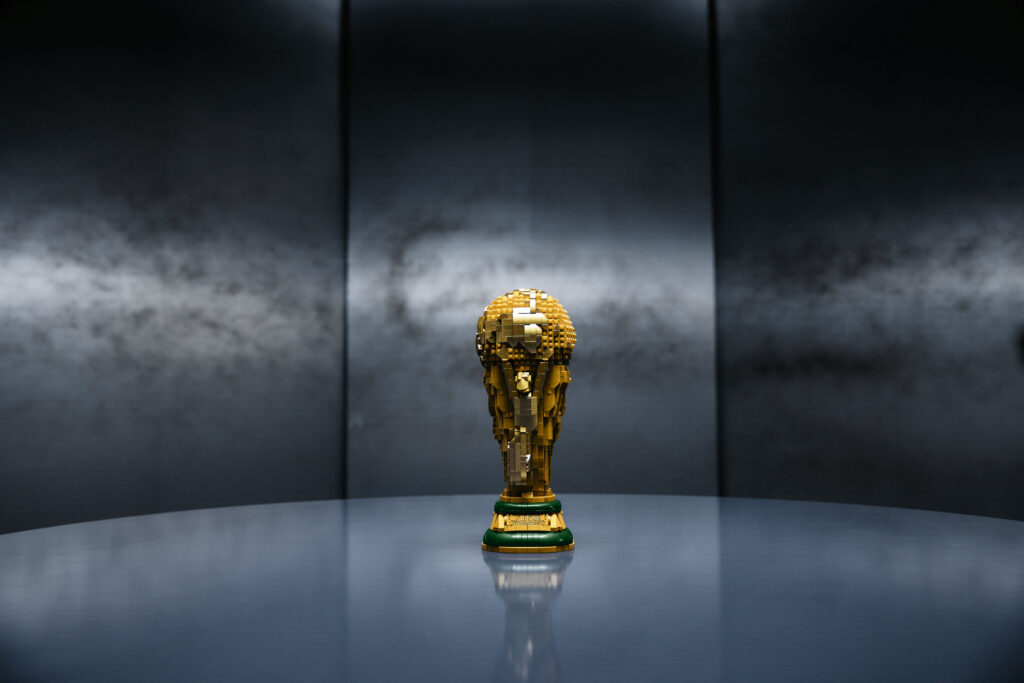
The collaboration between LEGO and the 2026 FIFA World Cup is a match made in heaven for brick-builders and football lovers alike. The partnership aims to bring creativity and the joy of play closer to the world of football than ever before, engaging fans of all generations globally.
Ahead of the tournament, LEGO introduced a special product portfolio, headlined by football's ultimate prize: the official FIFA World Cup Trophy. Released in March 2026, this set is the first-ever official, highly detailed 1:1 scale replica of the iconic trophy. The imposing model is meticulously crafted from 2,842 LEGO elements.
The model beautifully combines two different gold elements: shiny, lacquered bricks and custom-molded gold pieces. This marks the first time in LEGO history that so many gold-colored elements have been featured in a single set. Using a pull-tab on the upper globe section, the trophy opens up to reveal a hidden Easter egg scene. Inside lies the official 2026 World Cup logo alongside an exclusive, branded minifigure holding a mini FIFA World Cup trophy. Beneath the base, a printed plaque lists every World Cup champion since 1974, making this set a true historical collector's item.
Pop Mart
Pop Mart—the creative powerhouse behind the Labubu sensation—has also entered the pitch with its own World Cup collection. At this point, the only people who don't know what a Labubu is are those who lived under a rock last year. The Monsters Created by Kasing Lung, The Monsters’ iconic character with the wide, toothy smile has recently grown into the number-one pop culture icon for younger demographics. Collecting the plush toys and wearing them on bags has become a massive global trend. The thrill of blind-box shopping literally drove the world crazy last year, so it is no surprise that a fresh Labubu collection was dropped for an event as monumental as the World Cup.
Hollister Co.
As a defining force in American casual and streetwear culture, Hollister Co. also recognized the massive lifestyle potential surrounding the 2026 tournament. The brand launched a standalone capsule collection inspired specifically by the World Cup. This drop is a textbook example of how traditional sports merch is evolving: Hollister took the prestige and symbols of the world’s biggest football event and fused them with the streetwear aesthetic adored by Gen Z and Gen Alpha.
The entire collection was designed under the ethos of the "future-vintage" trend. This style deliberately blurs the lines between past and present. The cuts, materials, and graphic design evoke the classic football aesthetics of the '80s and '90s—channeling the vibe of vintage jerseys and old-school tracksuits—while the silhouettes remain perfectly tailored to modern trends. In creating the lineup, Hollister’s designers paid special attention to global football powerhouses, making the national teams of Brazil, France, Italy, and Mexico the backbone of the collection.
Coca-Cola x Adidas
Finally, we look at a powerhouse collaboration involving one of FIFA’s official tier-one partners.
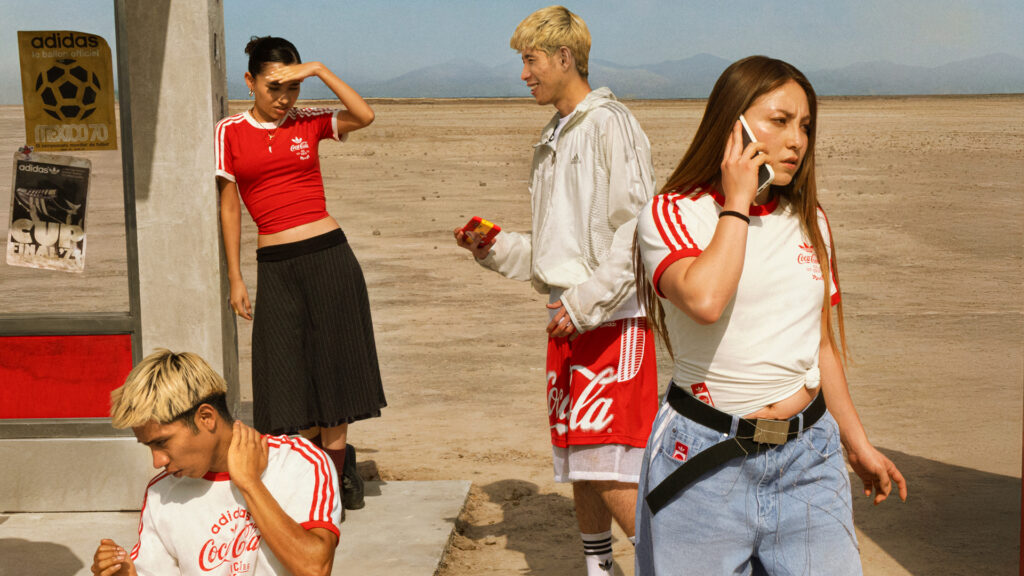
These two global giants first joined forces for the 2002 summer tournament. Now, 24 years later, they return to conquer one of the greatest moments in the sporting world once again. Rooted in iconic archival designs but completely reimagined, the collection merges Y2K streetwear culture with a classic athletic look across apparel, footwear, and accessories.
The footwear lineup centers around Coca-Cola®-inspired iterations of four signature adidas models from the 2000s. Each silhouette has been redesigned to resemble a different Coca-Cola can, complete with subtle details like water-droplet textures on the upper surfaces. The standout Megaride F50 model pays a special design tribute to the legendary, classic glass contour bottle.
The apparel and accessories range features co-branded track tops, jerseys, shorts, t-shirts, and a vibrant red airliner bag. The collection is intentionally split into two distinct design directions: one focuses on logo-centric graphics with a heavy, striking emphasis on branding, while the other prioritizes a vintage look, retro vibes, and nostalgia. The absolute crown jewel of the collection is a special jersey that embodies this dual approach perfectly, intentionally blending retro Coca-Cola® advertisements from different eras into a completely seamless, unique pattern.
Analyzing the campaigns of the brands listed above reveals a crucial conclusion: pop culture and sports mega-events no longer exist as two separate entities. The walls have completely come down. Sport—and in this case, football—has permanently merged with fashion, toys, and fast-moving consumer goods. As a result, you no longer need to be a hardcore sports consumer for an event of this scale to impact your daily life. In the past, World Cup fever remained bubbled within sports channels and local pubs. Today, however, the entire world is fully engaged because the biggest global brands are using these co-branding activations to deliver the excitement directly to their own unique consumer bases.
The other striking trend is that the retro wave is experiencing a golden age. Whether it’s adidas' Bringback archival jerseys, the Y2K nostalgia wave shared with Coca-Cola, or Hollister’s future-vintage aesthetic, a significant portion of these collections relies on rewriting the past. Consumers absolutely love nostalgia, and the fashion industry is brilliantly executing the task of molding vintage designs into modern, contemporary silhouettes.
Oldalunk sütiket használ, hogy biztosítsuk Neked a teljes élményt! Ilyen például a beállításaid elmentése. Kérünk, engedélyezd a sütiket, hogy jobb élménnyé tehessük számodra a látogatást a weboldalon!

A szükséges cookie-k elengedhetetlenek a weboldal alapvető funkcióinak biztosításához, és nélkülük az oldal nem működne megfelelően. Ezek a sütik nem tartalmaznak személyazonosításra alkalmas információkat.
A statisztikai cookie-k névtelen módon gyűjtik és jelentik az adatokat, lehetővé téve a weboldal tulajdonosának, hogy jobban megértse a látogatók weboldallal való interakcióit.
A személyre szabási cookie-k lehetővé teszik, hogy megjegyezzük azokat az információkat, amelyek befolyásolják a weboldal megjelenését és működését.
A marketing cookie-k a látogatók weboldalon végzett tevékenységének nyomon követésére szolgálnak, hogy számukra releváns hirdetéseket jelenítsünk meg (például Google Ads, Facebook Ads), és ösztönözzük őket az interakcióra, ezáltal növelve weboldalunk értékét.